Classic Car Inspection Houston: Before You Buy a Vintage Vehicle
|
Classic Car Inspection Houston: Before You Buy a Vintage Vehicle
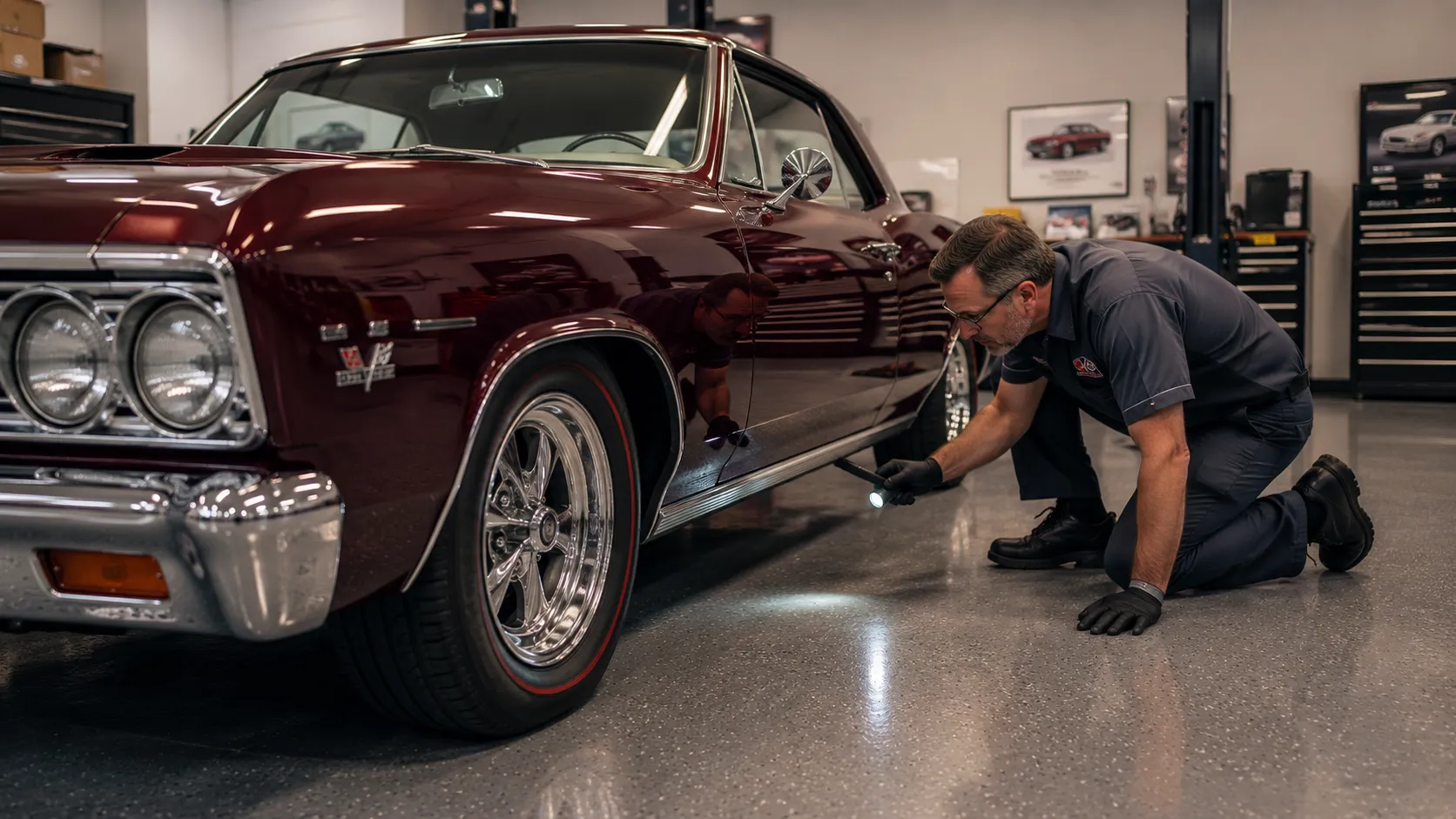
A classic car inspection in Houston covers structural rust assessment, hidden body filler (Bondo) detection using a paint thickness gauge, matching engine and VIN number verification, wiring harness condition, and interior originality. These are the checks a standard used car inspection skips – and on a vehicle worth $20,000 to $250,000, skipping them is how buyers turn a dream purchase into a money pit.
Houston is one of the most active classic car markets in the southern US. The Mecum Houston auction at NRG Center has drawn roughly 1,000 collector cars each spring for over a decade. Gateway Classic Cars maintains a permanent showroom here. Private collections, estate sales, and Facebook Marketplace listings circulate hundreds of vintage vehicles through the metro every month.
Before you commit to any of them, you need a classic car inspection. Not a standard pre purchase inspection – a dedicated inspection that understands what makes a 1967 Mustang or a 1970 Chevelle a sound investment versus a rust-bucket wearing fresh paint.
Here is exactly what that inspection covers, what Houston’s climate does to classic cars, and how to read the findings
Why a Classic Car Inspection Is Different From a Standard Used Car Check
A standard pre purchase inspection is built around modern vehicles. It relies heavily on an OBD-II diagnostic scan, checks for current fault codes, and evaluates wear patterns against known specifications for vehicles produced in the last 30 years.
Classic vehicles – generally defined as pre-1980 for most collectors – don’t have OBD-II ports. There are no stored fault codes to pull. Evaluating them requires physical inspection, mechanical knowledge specific to the era, and a trained eye for the things sellers hide. According to Hagerty’s valuation data, condition is the single biggest factor in classic car pricing – a #1 concours car can be worth three to five times more than the same model in driver condition.
Here is what a dedicated classic car inspection covers that a standard check doesn’t:
⦁ Structural rust assessment beyond the visual surface – floor pans, frame rails, and rocker panels are probed for depth and spread
⦁ Paint thickness gauge measurements across all body panels to detect body filler concealing prior repairs or rust
⦁ Engine casting number and VIN verification – cross-referencing the block casting, heads, and transmission tags against the vehicle’s build documentation
⦁ Wiring harness condition – cloth-wrapped original harnesses from the 1950s through 1970s are a known fire risk when the insulation deteriorates
⦁ Interior and trim originality assessment – determining whether the car has been reupholstered, gauge-swapped, or re-trimmed with non-original materials
⦁ Evidence of previous restoration work – identifying which repairs and restorations have been done, and how well
What a Classic Car Inspection Covers
Six areas get evaluated on every classic car inspection. Each one matters in ways that don’t apply to modern vehicles.
| Inspection Area | What Gets Checked | Why It Matters More on a Classic |
|---|---|---|
| Frame and floor pans | Rust depth and spread, structural integrity, evidence of prior weld repairs | Structural rust makes restoration economically impossible – a clean frame is non-negotiable |
| Body and paint | Paint thickness gauge readings, body filler detection, panel gap alignment, overspray | Heavy Bondo conceals accident damage and rust – and collapses resale value |
| Engine bay | Matching engine casting numbers, VIN stamps, date codes, leaks, modifications | A non-matching engine reduces collector value by 30-60% depending on the vehicle |
| Mechanical systems | Brakes, steering, suspension, drivetrain – all evaluated for pre-power-assist era components | Original drum brakes and manual steering require different expertise to assess correctly |
| Electrical wiring | Harness condition, insulation integrity, aftermarket additions, ground connections | Deteriorated cloth-wrapped wiring is a documented fire risk – full rewire costs $3,000-$8,000+ |
| Interior | Originality of upholstery, dash, gauges, trim panels and weatherstripping condition | Replacement interiors and non-original trim significantly reduce collector-grade value |
The engine and VIN check is the one sellers are most likely to be evasive about. A car advertised as a numbers-matching 1969 Camaro SS that turns out to have a replacement engine is worth substantially less than the asking price – regardless of how it drives.
Rust: The Thing That Kills Classic Car Deals in Houston
Houston’s Gulf Coast humidity is brutal on unprotected steel. Classic cars stored in non-climate-controlled garages, parked outdoors during hurricane season, or simply never rustproofed properly will show corrosion patterns that buyers from drier climates would never expect to see on a vehicle of the same age.
The inspection doesn’t just check for visible rust. It distinguishes between surface rust – cosmetic, manageable, relatively affordable to address – and structural rust, which compromises the frame, floor pans, and rocker panels that hold the car together.
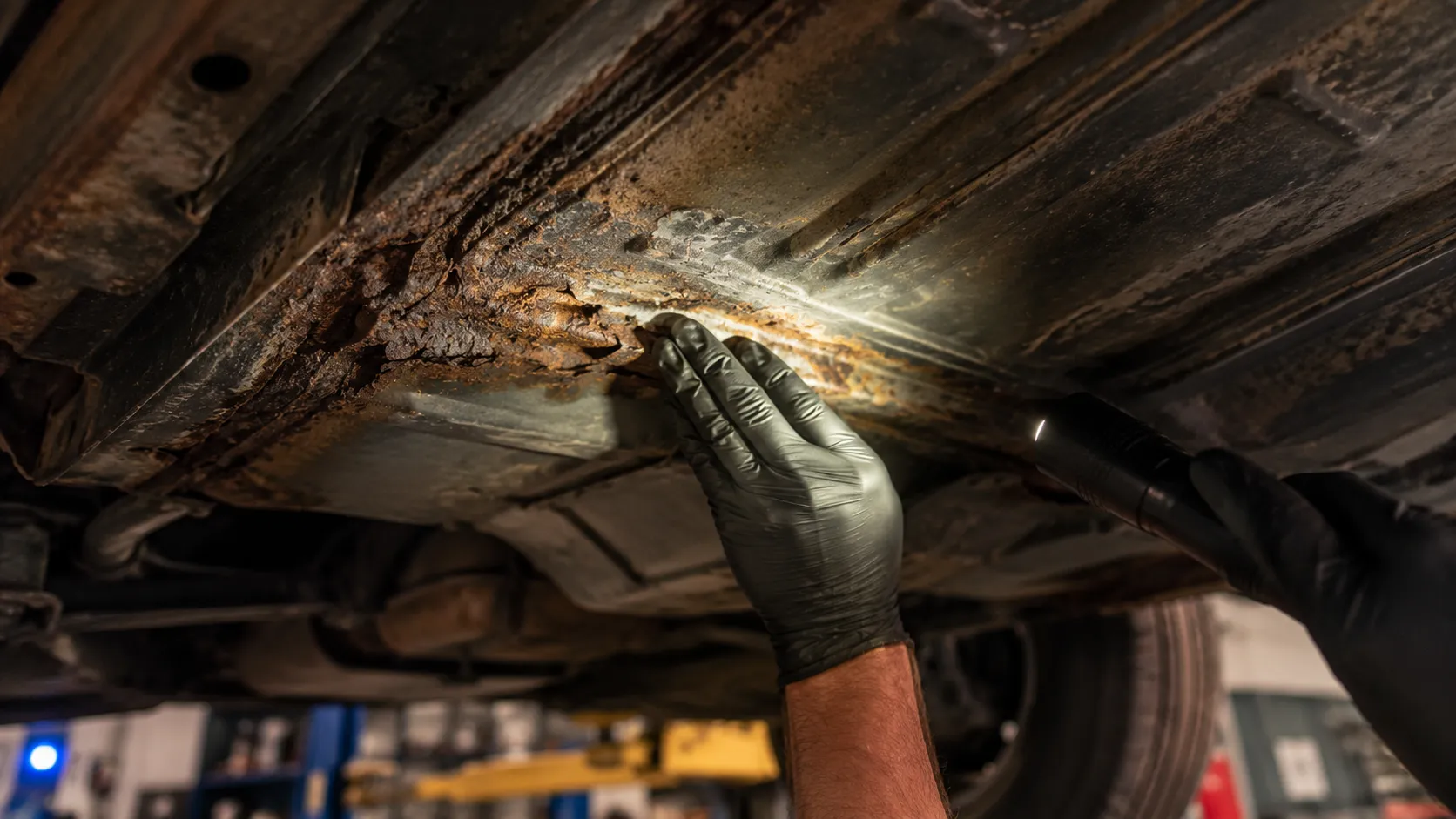
Here are the most common rust findings on Houston classics and what they typically cost to repair:
| Rust Finding | Severity Level | Typical Repair Cost |
|---|---|---|
| Surface rust on body panels | Low | $200-$1,500 per panel depending on spread |
| Rocker panel rust | Medium | $800-$3,000 – fabricated replacement often needed |
| Floor pan rust | High | $1,500-$6,000 depending on how much needs replacement |
| Frame rail rust | Critical | $5,000-$20,000+ – may make restoration economically unviable |
| Trunk floor and spare well | Medium | $800-$2,500 – commonly hidden under carpet or mats |
| Firewall and cowl rust | High | $2,000-$8,000 – complex area to repair correctly |
The frame rail row is the most important one. Structural rust on the main frame rails can make a restoration economically pointless – you spend more fixing the car than it will ever be worth. The inspection checks this before you spend a dollar on it.
Houston’s Harvey flood history adds another layer. Classic cars flooded in Harvey have a compounded rust problem: water infiltrated places that were previously sealed, accelerating hidden rust in areas that are nearly impossible to access without disassembly. A flood-damaged classic is almost always a money pit.
Bondo, Hidden Repairs, and What the Paint Thickness Gauge Finds
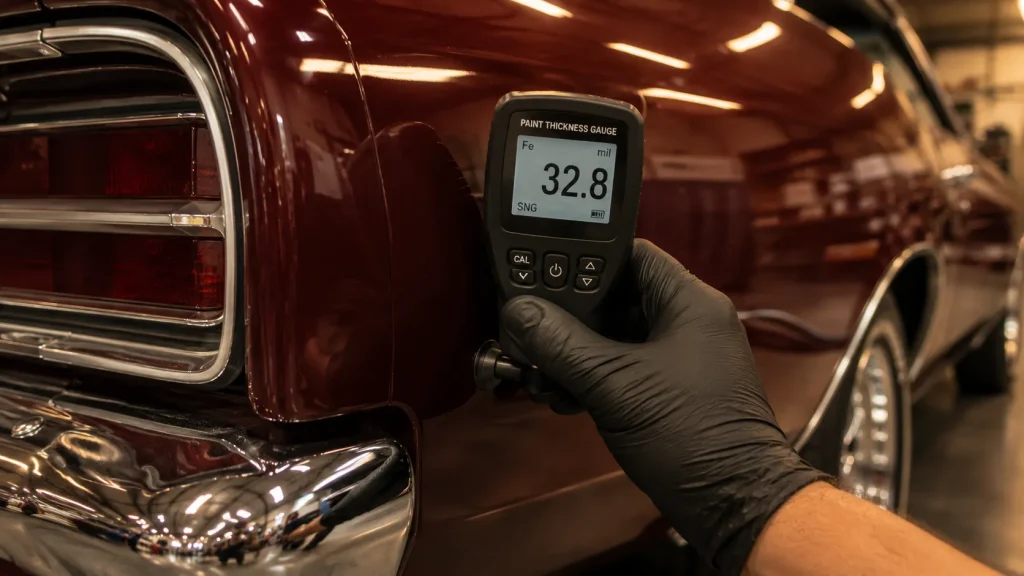
Body filler – commonly called Bondo – is the primary tool sellers use to hide rust repairs and accident damage on classic cars. Fresh paint over thick filler looks identical to fresh paint over solid metal.
The paint thickness gauge solves this. It measures the depth of the paint and filler layer at each panel. Factory-applied paint on original steel reads consistently thin. Panels with Bondo underneath read dramatically thicker – sometimes 10 to 20 times the factory depth – making it impossible to hide regardless of how good the paintwork looks from the outside.
Here’s what the thickness readings reveal:
⦁ Consistent thin readings across all panels suggests original or professional restoration paintwork
⦁ One or two panels reading thick indicates localized repair work – not necessarily a dealbreaker, but needs documenting
⦁ Multiple panels reading heavily thick suggests a car that has been extensively damaged and filled rather than properly restored
⦁ Readings near door jambs, windshield surrounds, and around trim openings reveal rust that’s been filled from the outside rather than cut out and replaced
A car with heavy Bondo in structural areas isn’t just a cosmetic concern. Body filler absorbs moisture, expands and contracts with Houston’s temperature swings, and eventually cracks through the paint – usually within a few years of the repair. You’re paying for a problem that will announce itself later.
Matching Numbers and What the VIN Verification Covers
For collector vehicles, the engine’s identity is as important as its condition. A matching numbers car has the engine it left the factory with – verified by cross-referencing the casting codes, date codes, and VIN stamping on the block against the vehicle’s documentation.
This matters enormously for value. A 1969 Camaro SS 396 with its original engine is a collector-grade vehicle. The same car with a period-correct replacement 396 is a driver. The same car with a Chevy crate engine is a fun cruiser – but not a numbers-matching collectible. The price difference between those three versions of the same car can easily be $30,000 to $60,000 at auction.
The inspection checks the casting number on the engine block and cylinder heads, the transmission tag if accessible, and any VIN stamps or partial VINs on major components. It won’t authenticate a car for concours judging, but it will tell you whether the engine in the car matches what the seller is claiming.
What About Flood Damage on a Houston Classic Car
A standard flood check looks for moisture in the cabin, rust on seat rails, and undercoating over frame damage. On a classic car, flood damage has additional implications.
Original wiring harnesses and cloth-covered electrical components that get soaked are extremely difficult to fully dry and remediate. The moisture works into connections, terminal crimps, and inside wire bundles where it sits indefinitely. On a 50-year-old car where wire insulation is already becoming brittle, this is a documented fire risk.
If a seller claims a classic car has been repaired after flood exposure and you want verification before committing, a follow-up inspection for $99 lets you confirm the work was done before the money changes hands.
Frequently Asked Questions
How is a classic car inspection different from a standard pre purchase inspection?
A classic car inspection focuses on areas that standard inspections skip: structural rust assessment, paint thickness and Bondo detection, matching engine and VIN number verification, original wiring harness condition, and interior originality. Pre-1996 vehicles have no OBD-II diagnostic port, so the inspection relies on visual, mechanical, and physical evaluation rather than scanner data.
What does matching numbers mean on a classic car?
A matching numbers car has its original engine still installed – verified by cross-referencing the engine casting codes and date codes with the vehicle’s VIN and build records. For collector vehicles, a non-matching engine can reduce value by 30 to 60 percent depending on the make, model, and era. The inspection verifies whether the casting numbers are consistent with the vehicle’s original build date.
How does Houston’s climate affect classic cars?
Houston’s Gulf Coast humidity accelerates rust significantly faster than dry climates. Steel that would take years to corrode in Arizona can show serious rust within months in unprotected Houston storage. Classic cars kept in non-climate-controlled garages, or parked outdoors during any extended period, are particularly vulnerable. The inspection looks for humidity-accelerated rust in floor pans, frame rails, trunk floors, and beneath chrome trim where moisture collects.
Can you inspect a classic car that is not currently running?
Yes, with some limitations. A non-running vehicle can still be inspected for structural rust, body condition, Bondo and prior repairs, interior originality, and matching numbers. The mechanical evaluation, road test, and some electrical checks require the vehicle to run. If the car does not start, the inspection report will note which assessments were completed and which were limited by the vehicle’s condition.
How much does a classic car inspection cost in Houston?
A Classic Car Inspection from Pre Purchase Auto Inspections LLC costs $239.95. This includes the structural rust assessment, paint thickness and Bondo detection, engine and VIN number verification, wiring harness evaluation, interior originality check, and a road test if the vehicle is operational. The inspection comes to the vehicle anywhere in the Houston metro. Call (346) 644-6168 or order an inspection online to schedule.
Get Your Houston EV Inspection Booked
Pre Purchase Auto Inspections LLC performs dedicated electric vehicle inspections across the Houston metro – Katy, Sugar Land, Pearland, The Woodlands, Pasadena, and beyond. We come to the vehicle. You get a full EV report the same day.
(346) 644-6168 | order an inspection online
Electric Vehicle Inspection: $249.99 | Hybrid Vehicle Inspection: $249.99 | Mobile service – we come to the car
Get a Pre Purchase Auto Inspection Today