Signs a Used Car Has Flood Damage: The Complete Guide
|
Signs a Used Car Has Flood Damage: 8 Warning Signs Every Houston Buyer Needs to Know
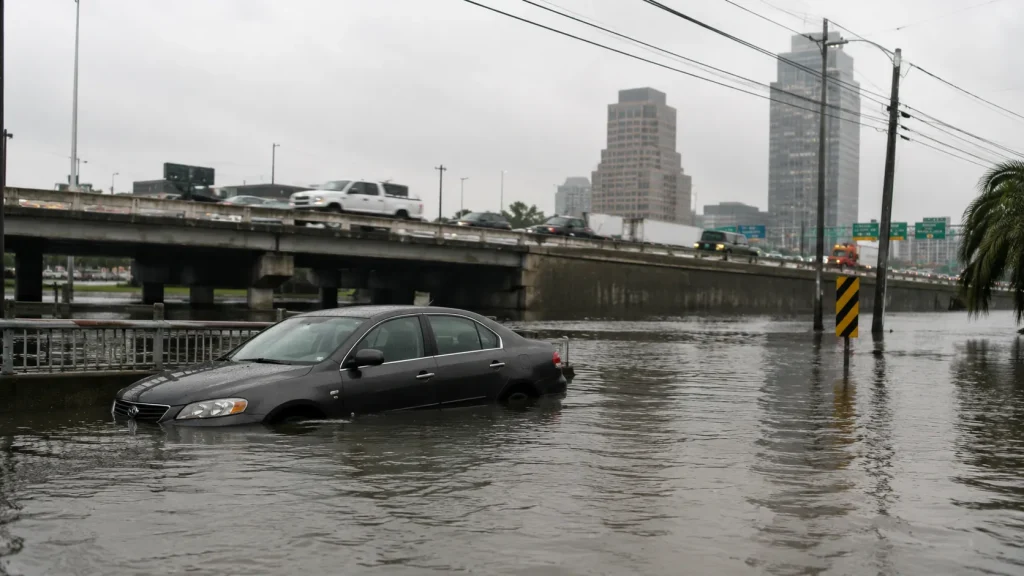
There are eight warning signs a used car has flood damage: a musty or mildew smell inside the cabin, brand-new carpet in an older vehicle, water stain tide lines on door panels or the center console, fogged or water-stained lights, rust on seat rail bolts or hinge screws, mud or silt deposits in the engine bay or spare tire well, drain plug tool marks indicating recent drainage, and brittle or corroded wiring under the dashboard. A persistent musty smell is the single most reliable indicator.
In 2026, Consumer Reports confirmed that 482,000 water-damaged cars returned to US roads. Texas and Florida account for the majority. In Houston alone, CarFax estimates 29,000+ flood-damaged vehicles are actively circulating – more than any other metro in the country.
Flood cars don’t come labeled. They come with fresh detailing, strong air fresheners, and sellers who know exactly which questions to deflect. Knowing what to look for before you open your wallet is the only protection you have.
Here are the eight warning signs that matter most – organized by what to check and what each finding means.
The 8 Warning Signs of Flood Damage on a Used Car
| Warning Sign | What It Looks Like | Severity |
|---|---|---|
| Musty or mildew smell | Persistent damp odor when you open the door and sit inside – not covered by air freshener for long. Turn on the A/C vents and smell the air output. | Critical |
| New carpet in an older car | Replacement carpets on a 5+ year old vehicle with no other upgrades. Costly to replace – only happens for a reason. Seat mounting bolts removed to dry or replace carpet. | Critical |
| Water stain tide lines | Ring-shaped stains on door panels, center console, or under seats at a consistent height – water leaves a tide line wherever it reached | High |
| Fogged or water-stained lights | Moisture droplets, water lines, or condensation inside headlight or taillight housings – not explained by cracked lenses | High |
| Rust on unpainted metal | Rust on seat rail bolts, door hinge screws, or brake hardware that would not corrode under normal conditions | High |
| Mud or silt deposits | Dried mud or fine silt in air filter housing, behind dashboard trim, in spare tire well, or in crevices of the engine bay where it wouldn’t settle from road dirt | High |
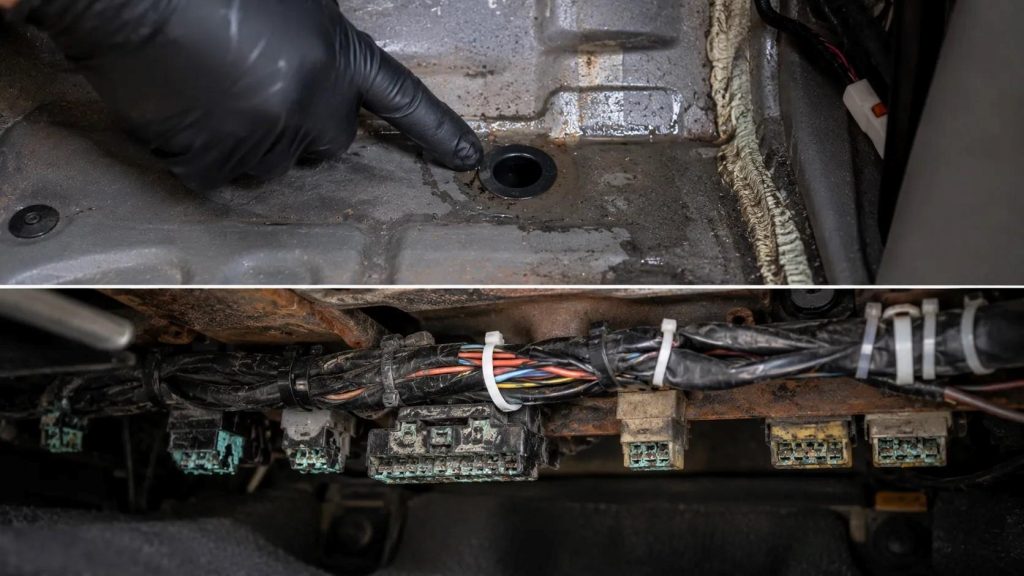
| Drain plug tool marks | Rubber floor drain plugs or door drain holes showing fresh tool marks indicating they were removed to drain standing water | Critical |
| Wiring harness corrosion | Brittle or discolored wire insulation under the dash or behind door panels. Wires that bend or crack rather than flex normally. | Critical |
Sign 1: The Smell Is the First Judge
Open the door and stand outside for a moment before getting in. Then sit down, close the door and windows, and take a slow breath. Mildew and mold have a specific smell – musty, slightly organic, and impossible to fully eliminate once the foam padding beneath the carpet has been contaminated.
Sellers know this. An overwhelmingly strong air freshener in an older car is a red flag on its own. Spray-on fabric freshener masks the mildew smell in a showroom or driveway for 20-30 minutes. Inside the car for longer, especially in Houston’s heat, the underlying smell returns.
The air conditioning vents are the final test. Turn on the A/C to full and hold your hand near the vents while smelling the output. If the evaporator coil has been wet, the musty smell comes directly out of the vents even when the carpet smells fine.
Sign 2: New Carpet in an Old Car
Carpet replacement costs $500 to $2,000 on a typical vehicle. Sellers don’t replace carpet unless something happened to it. New carpets on a five-year-old car with no other interior upgrades is the single most telling exterior sign of flood remediation.
Here is what to look for:
- Carpet that is newer, cleaner, or a slightly different shade than the rest of the interior
- Seat mounting bolts with fresh torque marks or anti-seize compound – seats must be removed to replace carpet properly
- New carpet that doesn’t quite fit the contours of the floor pan in one or two spots – flood remediation is a rushed job
- Carpet seams in unusual places, or carpet that doesn’t match the door kick panels or sill plates beneath it
Sign 3: Tide Lines and Water Stains
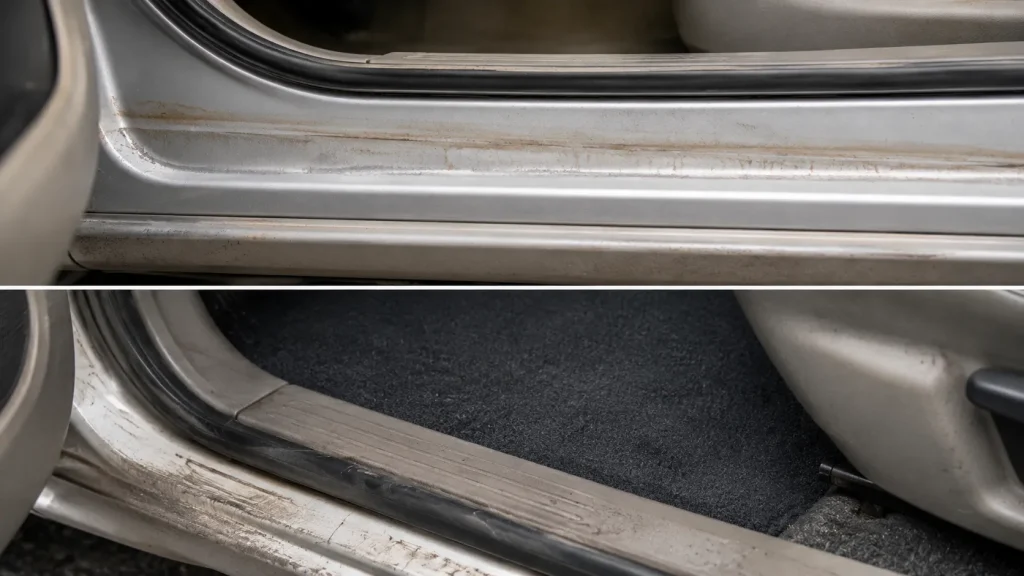
Floodwater doesn’t disappear cleanly. It leaves a tide line – a faint ring stain at the highest level the water reached. These lines appear on door panels, the center console, behind the seats, and inside the trunk.
A consistent tide line at the same height across multiple surfaces is definitive flood evidence. The staining is different from a spilled drink – it forms a horizontal ring rather than a vertical drip pattern.
The trunk is where sellers frequently miss cleaning. Lift the trunk carpet and check the spare tire well. Water pooling there leaves rust and staining that’s difficult to reach and rarely fully remediated.
Sign 4: Lights With Moisture Inside
Unless a headlight or taillight lens is cracked, there should be no moisture inside the housing. A lens that shows condensation droplets, a waterline ring, or fogging from inside the housing was submerged.
Check closely for small drilled holes in light housings. One improvised flood drainage technique is drilling a small hole at the bottom of the headlight housing to allow water to drain. The hole is sometimes left in place or plugged with silicone.
Signs 5 and 6: Rust in the Wrong Places
Metal that is normally protected from moisture – seat rail mounting bolts, door hinge screws, bare metal inside the trunk structure – corrodes only if it was submerged. Rust on these components in a vehicle that otherwise appears in good condition for its age is a strong indicator.
Mud and silt are the other tell. Road dirt enters the wheel wells and underside. But fine silt in the air filter housing, behind the dashboard trim panels, inside the spare tire well, or deposited in the crevices behind the engine is not road dirt. It’s water-carried sediment.
Sign 7: Drain Plug Evidence
Vehicles have rubber drain plugs in the floor pan and at the bottom of door cavities. When a flooded vehicle is being remediated, these plugs are removed to drain standing water from enclosed cavities.
Fresh tool marks on drain plug heads, or plugs that show signs of recent removal and reseating, are a specific and reliable flood indicator. This is one check that most buyers never think to make – and the one that most clearly shows intentional remediation.
Sign 8: Wiring Condition Under the Dashboard
Reach under the dashboard and gently bend the wire bundles near the main harness. Fresh wiring is flexible and the insulation stays intact. Wiring that has been wet and dried retains moisture over time in the insulation layer, eventually becoming brittle.
Corrosion on electrical connectors is the other indicator. Connectors that have oxidized green or show white crystalline deposits on the terminals have been exposed to water. This is the damage that leads to delayed electrical failures – months after the car looks and drives fine.
Why a Physical Inspection Catches What CarFax Misses
The critical point about all eight of these signs is that none of them appear on a vehicle history report. CarFax records flood damage only when it was officially reported through insurance. Title washing removes any record of the branding even when it was once there.
Houston has more title-washed Harvey vehicles circulating than any other market. A pre purchase auto inspection runs every one of these checks physically – carpet moisture probe, wire harness condition, drain plug inspection, OBD scan for flood-related module codes, and a full undercarriage check for rust patterns inconsistent with the vehicle’s stated history.
We run this check on every vehicle we inspect. It’s not a specialty add-on. It’s standard practice for any used car purchase in Houston’s market.
Frequently Asked Questions
What are the most reliable signs a used car has flood damage?
The most reliable signs are a persistent musty or mildew smell when you sit inside, water stain tide lines on door panels or the center console, brand-new carpet in an older vehicle, fogged or water-stained headlights, and rust on seat rail bolts or hinge screws that would not normally corrode. The smell is the most consistent single indicator – air fresheners mask it temporarily but it returns within minutes inside the car.
Can a flooded car with a clean title be sold legally in Texas?
Yes, through title washing. Texas law requires flood damage to be noted on the title, but sellers re-register the vehicle in a state with weaker disclosure laws to remove the flood branding before returning it to Texas. This produces a clean-looking Texas title on a vehicle with known flood history. Title washing is why a physical inspection is necessary even on a vehicle with a clean CarFax and clean title.
How long does it take for flood damage problems to appear?
Some problems appear immediately. Others develop over months or years as corrosion works through the wiring harness, ABS module, airbag system, and internal mechanical components. A car that drives and looks fine at the point of sale can develop serious electrical failures six to eighteen months later as corrosion progresses through connections that appeared intact. This delayed onset is what makes flood cars dangerous purchases.
Does a vehicle history report reliably show flood damage?
No. CarFax and AutoCheck only capture flood damage that was officially reported through an insurance claim, a state title branding, or a reported incident. Cash repairs, private sales, and out-of-state title washing all bypass the reporting system. Pre Purchase Auto Inspections LLC regularly identifies flood damage on Houston-area vehicles with completely clean CarFax reports.
How do I get a flood damage check in Houston?
Call (346) 644-6168 or order an inspection online at prepurchaseautoinspectionsllc.com. Every standard inspection includes a dedicated flood damage check: carpet moisture probe, wire harness corrosion, drain plug condition, undercarriage rust pattern analysis, and OBD scan for flood-related fault history. The inspection comes to the vehicle anywhere in the Houston metro. Standard Inspection: $159.99.
Don’t Guess on Flood Damage. Get It Verified.
Pre Purchase Auto Inspections LLC performs dedicated flood damage checks on every used vehicle, anywhere in the Houston metro. Mobile service – we come to the car.
Get a Pre Purchase Auto Inspection Today